25 settembre 2011

Il giardino segreto - The secret garden


Nel centro di Firenze ogni muro di recinzione, perfino ogni palazzo, può nascondere al suo interno un'insospettabile giardino ad uso esclusivamente privato, che può essere in molti casi modesto per dimensioni ed aspetto, ornato di semplici piante ed arredi, mentre in altri casi può sorprendere per la sua ricchezza fatta di alberi esotici, statue di pregio, fontane e altro.
Per questo provo sempre un po' di curiosità quando vedo apparire un po' di vegetazione attraverso un cancello o in fondo a un androne.
In questo caso, non si tratta di uno degli straordinari palazzi antichi del centro, ma di un più modesto caseggiato nella zona dei viali, eppure ho trovato emozionante l'apparizione di questo giardino così appartato e silenzioso.
Per vedere altri post passati sullo stesso argomento, consiglio di guardare qui, e anche qui e qui.


In the centre of Florence, every wall, even every building may hide inside an unsuspected garden exclusively reserved to private use, which in many cases may be modest for its dimensions and look, adorned with simple plants and furniture, while in other cases may surprise for its richness made of exotic trees, valuable statues, fountains and other things.
For this reason I always feel intrigued when I see some vegetation appearing through a gate or down a hall.
In this case, it isn't one of the extraordinary palaces of the centre, but a more humble block in the area of the boulevards, yet I found very fascinating the appearance of this garden, so silent and secluded.
If you wish to see other previos posts on the same matter, I give you my advice to look here, and also here and here.

15 settembre 2011

Tramonto suburbano - Suburban sunset


A metà strada fra la città di Firenze e i piccoli centri che oggi ne costituiscono la periferia, sono rimaste diverse aree che, per la loro posizione, non possono più dirsi campagna e che tuttavia non fanno ancora parte dell'ambito urbano.
Troviamo così campi incolti, o più raramente coltivati, più simili ad orti che a vere e proprie coltivazioni, vecchie case coloniche che appaiono fuori posto per la loro prossimità con gli imponenti insediamenti residenziali e commerciali sorti in epoca recente, zone invase da baracche, vegetazione spontanea, depositi improvvisati.
In mezzo a tutti questi sintomi di degrado si vedono però dei luoghi che, nonostante tutto, hanno mantenuto un legame con la loro storia e attraverso la presenza di piccole coltivazioni, alberi da frutto e altri segni delle cure umane raccontano come dovevano essere queste zone prima che l'espansione della città le rendesse marginali.
Questi campi, ritratti alla luce di un tramonto di inizio luglio, si trovano a pochi passi dalla linea della tramvia, fra il centro commerciale di Ponte a Greve e il nuovo ospedale di San Giovanni di Dio.


Halfway between the city of Florence and the small towns that today have become its outskirts, there are still several areas which, for their position, can't be considered countryside anymore, but aren't yet a part of the urban area.
So we find uncultivated fields, or occasionally under cultivation, more similar to orchards than to real farms, old farmhouses now looking out of their place for their nearness to the imposing shopping malls and residential districts built in recent years, areas invaded by sheds, spontaneous vegetation, improvised depots.
Among all these symptoms of decay, there are nevertheless some places that, in spite of all, have maintained a tie with their history and through the presence of small cultivations, fruit trees and other signs of human care, tell us how these zones were before the growth of the city made them marginal.
These fields, portrayed under the light of an early July sunset, are a short walk from the tramway, between the shopping mall of Ponte a Greve and the new Saint John of God Hospital.

08 settembre 2011

Serenità lungo il Mugnone - Serenity along the river Mugnone


È naturale cercare l'ombra nei pomeriggi afosi come quelli che hanno oppresso la città nelle scorse settimane: per questo invece di indirizzarmi verso il centro ho preferito camminare lungo i viali che costeggiano il Mugnone, ombreggiati da file di platani che, per la stagione avanzata, già cominciano a perdere le foglie.
Anche questa è una zona della città edificata fra l'Otto e il Novecento, dove i palazzi hanno forme e proporzioni altisonanti, ma raramente riescono a nascondere la loro natura di discendenti un po' impoveriti e privi di nobiltà dei magnifici palazzi del centro storico. 
Tuttavia negli androni appaiono targhe in ottone che vietano l'ingresso alle biciclette o negano la possibilità di recapitare avvisi pubblicitari; se si vede apparire qualcuno alla finestra si tratta di una donna di servizio intenta a pulire i vetri; se si incontrano cani a passeggio sono tenuti al guinzaglio da domestici dall'aria annoiata: molti dettagli rivelano che gli abitanti di questa zona hanno buone possibilità economiche e un'alta considerazione di se stessi.
Per questo, quando ho visto questo villino così chiaro e luminoso, addirittura con i fiori alle finestre, l'ho scelto per il mio acquerello come avrei scelto un volto sorridente in mezzo a troppe facce seriose.

It's only natural to look for shadow in sultry afternoons like the ones that have oppressed the city in the last weeks: that's why instead of going towards the city centre I preferred walking along the boulevards that follow the river Mugnone, overshadowed by rows of London planes which, due to the late season, have already started to lose their leaves.
Also this area of the city is among the ones built between the Nineteenth and the Twentieth century, where buildings are bombastic and massive, but can hardly hide their nature of impoverished, not noble descendants of the magnificent palaces of the city centre.
Anyway, in the halls one can see brass plaques refusing the admittance of bycicles or stopping from delivering ads; if someone appears at a window, it's a house servant busy cleaning the glass; if one meets walking dogs, they are kept on a leash by serving men seemingly bored: many details reveal that the inhabitants of this area have a good income and a high regard for themselves.
For this reason, as soon as I saw this small building, so clear and bright, even with flowers at the windows, I chose it for my watercolour as I would have chosen a smiling face among too many serious faces .

25 agosto 2011

Viaggio in Dalmazia - Trip to Dalmatia (3)

Dubrovnik
La chiesa di San Biagio
The church of Saint Blaise

Dubrovnik
La chiesa di San Salvatore
The Saint Saviour Church

Dubrovnik
Le mura e porta Pile
The walls and the Gate of Pila


Nel nostro giro non poteva mancare una visita a Dubrovnik, antica città di origine romana, sottomessa a Venezia dal 1204, quindi repubblica indipendente dalla metà del XIV secolo, un tempo ricchissima grazie alle attività commerciali favorite dalla sua posizione nel Mediterraneo, finché un terribile terremoto nel 1667 segnò il suo declino.
La città attuale è il risultato della ricostruzione operata in epoca barocca all'indomani del terremoto, e nonostante le distruzioni subite durante l'assedio del 1991-92, ha mantenuto la sua straordinaria eleganza in cui convivono gotico veneziano, rinascimento fiorentino, testimonianze barocche e resti medievali, in un insieme raffinato e splendente grazie alla chiara pietra calcarea utilizzata come materiale da costruzione oltre che per le eleganti pavimentazioni delle strade, oggi lucide per l'usura.
Solo il primo di questi tre schizzi è stato realizzato direttamente sul posto; non ho potuto fare di meglio a causa del caldo, della luce quasi insostenibile, delle folle di turisti in ogni dove, soprattutto comitive di gite organizzate, che giungono qui in pullman o a bordo di gigantesche navi da crociera.


In our tour, we couldn't miss visiting Dubrovnik, ancient city of Roman origin, subject to Venice from 1204, then independent republic from the middle of the Fourteenth Century, once very wealthy thanks to the trade business favoured by its position in the Mediterranean, until a terrible earthquake in 1667 marked its decline.
The city of today is the result of the reconstruction made in the baroque period after the earthquake, and despite the destruction due to the siege of 1991-92, it has maintained its extraordinary elegance where Venetian gothic, Florentine renaissance, baroque evidences and Middle Ages remains live together in a refined whole, shining for the clear calcareous stone used as building material and also for the elegant paving of the the streets, now bright for the usage.
Only the first of these sketches was made directly on location; I couldn't do better because of the heat, the almost unsustainable light, the crowds of tourists everywhere, especially organized groups that come here by coach or on board of huge cruise ships.

22 agosto 2011

Viaggio in Dalmazia - Trip to Dalmatia (2)

La collina a est di Pupnatska Luka
The hill east of Pupnatska Luka

Le isole a sud di Korčula viste da Pupnatska Luka
The islands south of Korčula seen from Pupnatska Luka

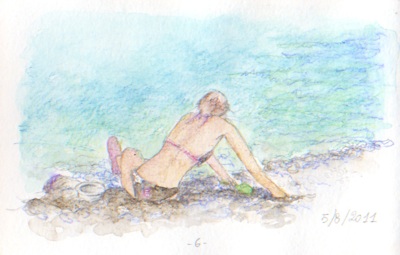
Una giovane mamma gioca con la sabbia sulla spiaggia
A young mother plays with sand on the beach


La Dalmazia con le sue isole è nota per le sue acque pulite e trasparenti, mentre non è affatto facile trovare spiagge ampie e comode, trattandosi di una costa frastagliata e rocciosa, spesso resa accessibile ai bagnanti da deludenti banchine in cemento.
A Korčula invece esistono belle spiagge di ciottoli, come quella di Pupnatska Luka, dove abbiamo passato una piacevole, riposante giornata circondate dal verde intenso delle colline ricoperte di pini e dai colori cangianti del mare e delle isole intorno.

Dalmatia with its islands is known for its clean, transparent waters, while it isn't easy at all to find wide, comfortable beaches, since the coast is rocky and jagged, often made accessible to bathers through disappointing concrete docks.
In Korčula instead there are beautiful pebble beaches, like the one of Pupnatska Luka, where we spent a pleasant, relaxing day surrounded by the intense green of the hills covered with pines and by the changing colours of the sea and the islands all around.