Visualizzazione post con etichetta architecture. Mostra tutti i post

02 gennaio 2020

Due giorni ad Assisi - Two days in Assisi


Paesaggio dal percorso verso l'Eremo
Landscape from the trail to the Hermitage
Alla fine di dicembre 2019, insieme alla mia amica Ilaria ho passato due giorni nella bellissima Assisi. E' stato molto riposante potersi immergere nel paesaggio circonfuso di una magica luce azzurra, come se davvero in questo luogo, che è soprattutto un luogo di devozione verso San Francesco, il cielo fosse più vicino alla terra.
Abbiamo visitato l'Eremo delle Carceri, percorrendo a piedi la distanza che lo separa da Assisi, e alcune delle numerose chiese, fra cui l'imperdibile Basilica di San Francesco (che contiene affreschi bellissimi, da non stancarsi mai di guardarli), Santa Maria Sopra Minerva (come non rimanere colpiti dall'apprendere che si tratta di un luogo sacro, punto di incontro fra l'umanità e il divino, da oltre 2000 anni?), San Rufino, Santa Chiara.
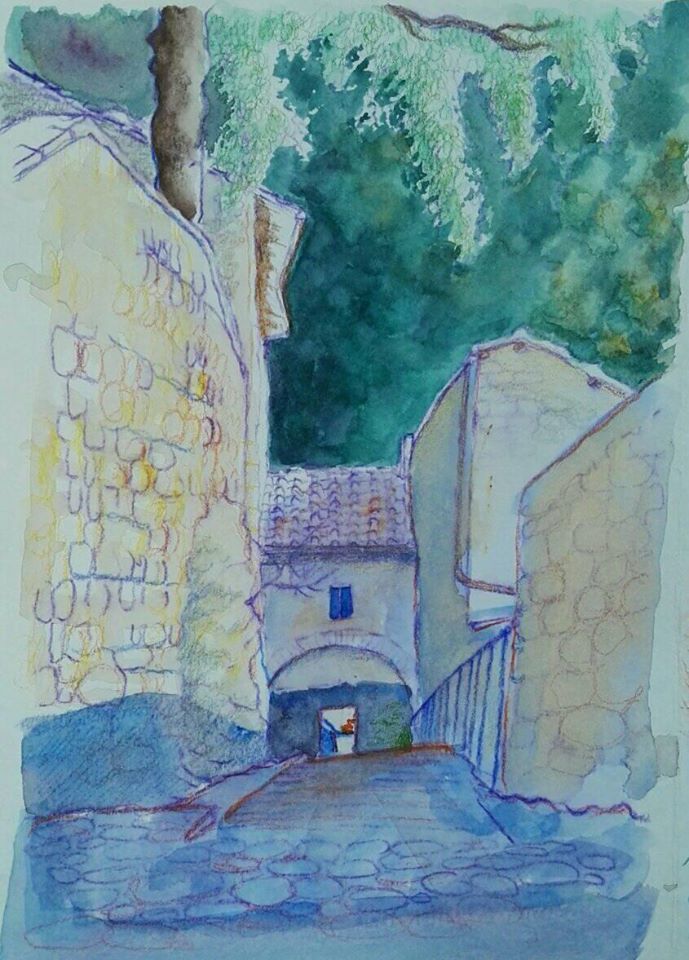
ingresso all'Eremo delle Carceri
Entrance to the Eremo delle carceri (Hermitage of Saint Francis)
Non solo nelle chiese, ma anche nelle vie di questa piccola città splendidamente ben conservata, si respira un'atmosfera insolita, come se davvero nell'intimo di ciascuno prevalesse il desiderio di comunicare con l'invisibile, di guardare dentro se stessi.
Un luogo unico, nel quale già non vedo l'ora di tornare.

La Rocca di Assisi al crepuscolo
The Rocca Maggiore castle in the twilight
la Basilica di San Francesco
the Basilica of Saint Francis
At the end of December 2019, together with my friend Ilaria I spent two days in the beautiful Assisi. It was very restful immersing ourselves in the landscape surrounded by a magic blue light, as if in this place, which is above all a place of devotion to Saint Francis, the sky was really closer to the earth.
We visited the Eremo delle carceri, walking along the distance between it and Assisi, and some of the many churches, including the unmissable Basilica of San Francesco (which contains many beautiful frescoes), Santa Maria Sopra Minerva (I was impressed to learn that it has been a sacred place of meeting between humanity and the divine for over 2000 years), San Rufino, Santa Chiara.
Not only in the churches, but also in the streets of this little town that is wonderfully well preserved, one breathes an unusual atmosphere, as if in the depths of each one the desire to communicate with the invisible world, to look inside yourself is prevailing.
A unique place, to which I'm already looking forward to going back.

16 agosto 2019

Le Rampe del Poggi


Eccole qua, le bellissime Rampe del Poggi, realizzate negli anni di Firenze Capitale, restituite al loro splendore originario, con l'acqua che scorre frusciando da una vasca all'altra rendendo fresco e piacevole il dislivello che sovrasta piazza Poggi, dove si trova il torrino di San Niccolò. Mentre dipingevo, sono rimasta colpita vedendo diversi fiorentini arrivare in macchina, scendere per ammirare il luogo conosciuto eppure nuovo (dopo il restauro), e insieme a me commentare con gioia ed entusiasmo la bellezza di questa architettura.
Cosa assai rara a Firenze, dove per chiunque è più facile ottenere critiche che lodi.
Spero di tornarci presto.
(acquerello su carta fatta a mano di Lorenzo Santoni)

Here they are, the beautiful Poggi Ramps, built during the years when Firenze was the capital of Italy, restored to their original splendor, with the water flowing rustling from one basin to another, making the steep scarp above Piazza Poggi - where there is the tower of St. Niccolò - a fresh and pleasant place.
While I was painting, I was struck when I saw several Florentines arriving by car, getting out to admire the well known and yet new place (after the restoration), and commenting with me with joy and enthusiasm on the beauty of this architecture.
A very rare thing in Florence, where it is easier for anyone to get criticism than praise.
I hope to come back soon.

(watercolor on Lorenzo Santoni's hand made paper)

23 settembre 2018

Firenze, piazza dei Ciompi


Appena poche settimane fa è stata inaugurata la nuova Piazza dei Ciompi, rinnovata dopo lo spostamento in un'altra sede dell'antico e amato mercatino dell'antiquariato che per tanti anni è stato l'anima di questo luogo.
Ora al centro della piazza c'è un tranquillo giardino recintato, non è la stessa cosa ma devo dire che la piazza rimane comunque un luogo bellissimo e piacevole, il posto ideale per trascorrere un'intera mattina di disegno con altri Urban Sketchers, alcuni fiorentini, altri venuti da molto lontano, insieme anche al vivace gruppo Firenze Drawing Club, tutti uniti dal comune interesse per il disegno dal vivo e per l'arte.

Just a few weeks ago the new Piazza dei Ciompi was inaugurated, renewed after moving to another location the ancient and beloved antique market which for many years was the soul of this place.
Now in the middle of the square there is a quiet enclosed garden, not the same thing but I must say that the square is still a beautiful and pleasant place, the ideal location to spend a whole morning drawing with other Urban Sketchers, some Florentines , others coming from far away, together with the members of the lively Florence Drawing Club, all united by the common interest in location drawing and art.

14 settembre 2018

Sesto Fiorentino, al crepuscolo


Questa estate ho avuto il piacere di partecipare all'evento "Sesto Arte" che si è svolto nel centro di Sesto Fiorentino, poco distante da Firenze, dove insieme a una quantità di artisti ho trascorso una bella serata di luglio disegnando e dipingendo per strada, mentre i cittadini di Sesto potevano fermarsi a guardare fra un acquisto e l'altro, approfittando dei negozi aperti.
Per me è stata un'occasione bella di scambio con artisti interessanti, e anche per sentire in diretta i commenti dei passanti su alcuni dei miei lavori che tenevo esposti su un cavalletto vicino a me.
E, cosa non meno interessante, la serata mi ha dato l'opportunità di dipingere quando il sole era ormai tramontato, sperimentando il mutare delle luci nell'ora del crepuscolo.
(acquerello su carta Magnani 34x22 cm)

This summer I had the pleasure of taking part to the "Sesto Arte" event, which took place in the center of Sesto Fiorentino, not far from Florence, where together with a number of artists I spent a nice July evening drawing and painting on the street, while the citizens of Sesto could stop and look between one purchase and another, taking advantage of the open shops.
For me it was a nice opportunity to exchange with interesting artists, and also to hear live comments from the passersby on some of my works that I kept exposed on an easel next to me.
And, no less interesting, the evening gave me the opportunity to paint when the sun had set, experiencing the changing of lights at twilight.
(watercolor on Magnani paper, 13"x8,5")

22 aprile 2018

La Vela a Roma


Ho passato una domenica piacevolissima insieme agli amici del gruppo "Sketchers Maledetti de' periferia" (qui la loro pagina su Facebook), dedicando la mattinata a un'incredibile opera architettonica della periferia romana purtroppo rimasta incompiuta: la "Vela" di Santiago Calatrava, copertura di un impianto sportivo che avrebbe dovuto accogliere i Mondiali di nuoto del 2009, ma che non è mai stata terminata.
Mi aspettavo una struttura già fatiscente, come si potrebbe prevedere trattandosi di un cantiere abbandonato da 9 anni, e invece sono rimasta sorpresa dalla bellezza della sua forma che si impone anche a grande distanza con una lucentezza che ha qualcosa di misterioso e anche di spirituale.
Mi è venuto da pensare che, effettivamente, una struttura come questa sarebbe stata più adatta a una cattedrale che a un centro sportivo, e forse questa dissonanza fra la sua forma e la sua funzione prevista non è estranea ai motivi del suo attuale abbandono. Ho immaginato gli archeologi che fra migliaia di anni la studieranno senza capire, trovando in quest'oggetto un enigma insuperabile.


I spent a very pleasant Sunday with the friends of the group "Sketchers Maledetti de' periferia" (here their Facebook page), dedicating the morning to an incredible architecture of the Roman suburbs that unfortunately remained unfinished: the "Vela" (i.e. "Sail") by Santiago Calatrava, a sports facility that was supposed to host the 2009 World Swimming Championships, but which has never been completed.
I was expecting a decaying structure, as might be expected in the case of an abandoned building site for 9 years, and instead I was surprised by the beauty of its shape imposing even at a great distance with a shininess somehow mysterious and even spiritual.It occurred to me that, indeed, a structure like this would have been better suited to a cathedral than a sports center, and perhaps this dissonance between its shape and its intended function has something to do with the reasons for its current state of abandon. I imagined the archaeologists that in thousands of years will study it understanding nothing, finding in this object an insurmountable enigma.

17 marzo 2018

Il Piazzale degli Uffizi


Ho passato una mattina piacevolissima nel piazzale degli Uffizi, disegnando insieme agli amici e alle amiche del gruppo Acquafirenze.
A volte mi lascio trasportare dal mio amore per il disegno di architettura, e allora passo molto tempo in lavori meticolosi che poi restano spesso incompiuti, altre volte invece mi abbandono alla vertigine di perdermi in un groviglio di linee abbozzate, dove tutto - proporzioni, prospettiva, dettagli - resta sfrontatamente approssimativo.
Procedevo chiedendomi se non stessi un po' esagerando, stamattina, nell'avventurarmi su questa seconda strada (che può sembrare la più facile e invece non lo è affatto), quando un gruppo di piccoli studenti in gita si è radunato intorno a noi e ci ha inondati con un coro spontaneo di "magnifique!", "trop beau!" e via dicendo, in un modo che mi ha fatto quasi pensare che mi stessero un po' prendendo in giro. Ma i loro occhi e i loro sorrisi dicevano che non c'era ombra di derisione. E' stato per me il più grande incoraggiamento a non abbandonare questa strada, anche se i risultati lasciano ancora a desiderare...
(Matita e acquerello su taccuino Moleskine)

I spent a very pleasant morning at the Piazzale degli Uffizi, drawing with my friends of the Acquafirenze group.
Sometimes I let myself be transported by my love for architectural drawing, and then I spend a lot of time in a meticulous work that then remain often unfinished, other times I abandon myself to the vertigo of losing myself in a tangle of sketchy lines, where everything - proportions, perspective, details - remains shamelessly approximate.
I was wondering if I was not a bit exaggerating, this morning, venturing into this second path (which may seem the easiest and it is not at all), when a group of pupils on a trip gathered around us and flooded us with a spontaneous chorus of "magnifique!", "trop ​​beau!" and so on, in a way that almost made me think they were teasing me. But their eyes and their smiles said that there was no shadow of derision. It was for me the greatest encouragement not to abandon this path, even if the results are still quite unsatisfactory...
(Pencil and watercolor on Moleskine Sketchbook)

26 dicembre 2017

Piazza Santissima Annunziata

.
Il mio non è che uno schizzo fatto in poco tempo e con più attenzione alla freschezza e all'immediatezza che alla precisione. Ma la piazza, per la sua storia, per la sua importanza, meriterebbe molto di più. Si tratta di uno spazio puramente rinascimentale, racchiuso su tre lati da edifici con colonne in pietra grigia su cui sono impostati archi a tutto sesto. Nello schizzo si vedono a sinistra la facciata della chiesa della SS. Annunziata, e a destra il prospetto inconfondibile dell'Ospedale degli Innocenti, sede di un'antichissima istituzione che da secoli e ancora oggi protegge i bambini e in particolare quelli provenienti dalle famiglie più povere e disagiate, di cui oggi si può conoscere la storia anche visitando il museo che si trova al suo interno. Le sue forme, caratterizzate da razionalità e armonia di proporzioni, furono ideate da Filippo Brunelleschi, maestro dell'architettura del Quattrocento che ancora oggi è nel cuore di tutti quelli che amano Firenze.
(Acquerello su carta Fabriano Blocco per Artisti 23x31 cm).

This is nothing but a sketch made in a short time and with more attention to freshness and directness than precision. But this square, for its history and importance, deserves much more. It is a pure Renaissance space, enclosed on three sides by buildings with gray stone columns on which all-round arches are set. In the sketch you can see on the left the façade of the church of the SS. Annunziata, and on the right the unmistakable front of the Ospedale degli Innocenti, home of an ancient institution that has been protecting children for centuries and especially those coming from the poorest and most disadvantaged families, whose history can also be known by visiting the museum inside. Its forms, characterized by rationality and harmony of proportions, were designed by Filippo Brunelleschi, master of fifteenth-century architecture who is still today in the heart of all those who love Florence.
(Watercolour on Fabriano paper "Blocco per Artisti" 9"x12").

28 novembre 2017

Piazza Santa Elisabetta


Molte cose a Firenze sono antiche; ma alcune sono più antiche di altre.
Fra le costruzioni del suo più lontano passato, c'è questa singolare torre che si distingue da tutte le altre torri per la sua pianta circolare. E' conosciuta come Torre della Pagliazza. Risale al periodo di dominazione bizantina della città, iniziato con la caduta dell'impero romano d'Occidente (476 d. C.) e finito qualche secolo dopo. Oggi si affaccia sulla piccola e quasi nascosta piazza S. Elisabetta, le sue finestre sono state ingrandite per permetterne l'uso e grazie a tali modifiche può ospitare una porzione di un albergo decisamente originale.
Ho realizzato questo disegno in una domenica pomeriggio, cercando faticosamente di non farmi distrarre dalle numerose persone di passaggio, e alla fine cercando di accelerare per concludere prima del tramonto. E ho dipinto il disegno solo successivamente, aiutandomi con delle fotografie, perché non ho voluto che la fretta mi togliesse il piacere di perdermi fra le pietre e i mattoni di queste antiche costruzioni.
Trovate questa piazza anche in questo mio vecchio post.
(Acquerello su carta Fabriano Blocco per Artisti 23x31 cm).


Many things in Florence are old; but some are older than others.
Among the buildings of its farthest past, there is this singular tower that stands out from all the other towers for its circular plan. It is known as Pagliazza Tower. It dates back to the Byzantine period of domination of the city, which began with the fall of the Western Roman Empire (476 AD) and ended a few centuries later. Today, it overlooks the small and almost hidden square of S. Elisabetta, its windows have been enlarged to allow its use and thanks to such modifications it can accommodate a portion of a truly original hotel.
I made this sketch on a Sunday afternoon, struggling hard not to get distracted by the many passing people, and eventually trying to speed up to finish before sunset. And then I painted the sketch only afterwards, helping me with photographs, because I did not want the haste to prevent me from getting lost in the stones and bricks of these ancient buildings.
You can find this square in this old post of mine.
(Watercolour on Fabriano paper "Blocco per Artisti" 9"x12").

24 novembre 2017

Viaggio nei luoghi di Firenze Capitale: il Viale Matteotti


Nel 2015 ho fatto un viaggio attraverso alcuni luoghi legati al periodo in cui Firenze è stata capitale d'Italia, fra il 1865 e il 1871. Alcuni di questi luoghi li ho scelti per il loro valore di testimonianze importanti di quell'epoca, che ha determinato grandi cambiamenti nella città, altri li ho scelti spinta soprattutto dalle mie sensazioni.
Così decisi di realizzare questo schizzo in un punto del viale Matteotti, che quando fu creato si chiamava viale Principe Amedeo, scegliendone uno scorcio quasi casualmente. Ma forse il caso ha contribuito solo in piccola parte, poiché rivedendo questo schizzo, in queste facciate ho ritrovato il carattere di tutto il viale, fra i più signorili della città, simile a un abito ben tagliato, ma con la stoffa di colore grigio.
Era marzo 2015, venti mesi fa, e nonostante la distanza nel tempo (che a me sembra anche più lunga, come se fossero venti anni), guardando questo schizzo torno a sentire il freddo che c'era nel viale, e il rumore, e tutte le mie emozioni di allora.
(Matita blu, acquerello e pennarello su carta Fabriano per acquerello)

In 2015 I traveled through some places belonging to the period when Florence was the capital of Italy, between 1865 and 1871. I chose some of these places for their value of important testament of that time, which determined major changes in the city, some others mainly driven by my feelings.
So I decided to make this sketch at a point of the Viale Matteotti, which when it was created was called Viale Principe Amedeo, choosing a view almost by chance. But perhaps chance  contributed only to a small extent, since looking again at this sketch, on these facades I found the character of the whole boulevard, one of the most noble of the city, similar to a well-cut dress, but made with a  gray fabric.
It was March 2015, twenty months ago, and despite the distance in time (which seems to me even longer, as if they were twenty yearsI), watching this sketch I come back to feel the cold that was in the avenue, and the noise, and all my emotions of then.
(Blue pencil, watercolour and ink liner on Fabriano  watercolour paper)

19 novembre 2017

Un sabato mattina al Santa Rosa Bistrot


Negli ultimi mesi ho partecipato spesso alle uscite di Acquafirenze, un meraviglioso gruppo di acquarellisti e disegnatori che ogni settimana si riunisce per disegnare e dipingere dal vivo in città o nei dintorni.
Uno dei nostri luoghi di ritrovo preferiti è il piacevolissimo Santa Rosa Bistrot, sull'omonimo Lungarno, dove stando seduti ai tavoli all'aperto si possono ritrarre dettagli interessanti delle architetture e della natura circostante.

Questa è una bella casa che si vede svettare dagli alberi del suo giardino mentre in basso, si vedono le più modeste costruzioni del bistrot.
(acquerello su carta Fabriano 31x23 cm)

Recently I often took parto to the gatherings organized by Acquafirenze, a wonderful group of watercolorists and sketchers who meet every week to sketch and paint on location somewhere in the city or in the surroundings.
One of our favorite places is the lovely Santa Rosa Bistrot, on the namesake Lungarno, where you can portrait the interesting details of the surrounding architecture and nature while sitting at the outdoor tables.
This is a beautiful house that you can see coming out from the trees of its garden, while below you can see the more humble bistrot buildings.
(watercolor on Fabriano paper 12x9")

20 aprile 2017

Piazza San Firenze


Fra Palazzo Vecchio e il Bargello, si apre lo spazio di questa piazza, reso spettacolare dalla presenza del settecentesco Oratorio dei Filippini, fino a pochi anni fa sede del Tribunale di Firenze, oggi in attesa di una prossima futura destinazione.
Un luogo in fase di transizione: sarà forse per questa sua affascinante qualità che in un sabato dello scorso febbraio lo ho scelto per aprire la serie di acquerelli del mio carnet dedicato a nove piazze di Firenze. A seguire, presto, le altre otto.
(matita a olio e acquerello su carta Arches 31x20,5 cm)

Between Palazzo Vecchio and the Bargello, the space of this square opens, made spectacular by the presence of the eighteenth-century Oratorio dei Filippini, which was until a few years ago the seat of the Court of Florence, and today is waiting for a near future destination.

A place in transition: it is perhaps for this fascinating quality that on a Saturday of last February I chose it to open the series of watercolours of my carnet dedicated to nine squares of Florence. Next, soon, the other eight.

(oil pencil and watercolour on Arches paper, 12"x8")

06 novembre 2016

Piazza San Marco


La vita non scorre sempre continua, a volte fa dei salti. E dopo, anche i luoghi familiari non sembrano più gli stessi. Questa è piazza San Marco a Firenze, in un pomeriggio d'autunno che è un po' meno luminoso di come ricordavo fossero gli autunni, prima.

Life does not always flows continuously, sometimes it makes jumps. And then, even familiar places seem no longer the same. This is Piazza San Marco in Florence, in an autumn afternoon that is a little less bright than I remembered were the autumns, before.

10 dicembre 2015

Luoghi di Firenze capitale: la Loggia al Piazzale Michelangelo


Inizialmente destinata ad accogliere una raccolta di calchi di opere di Michelangelo che si trovano fuori Firenze, la loggia costruita da Giuseppe Poggi fra il 1871 e il 1876 non ebbe mai questa funzione.
Abbandonata l'idea del museo monografico, fu infatti fin dagli inizi utilizzata come caffè ristoro.
In posizione defilata rispetto al piazzale Michelangelo, uno dei luoghi preferiti dai turisti che da qui godono di una vista straordinaria sulla città, si fa tuttavia notare per la sua eleganza e per il carattere monumentale, estremamente curato della sua architettura.
(Matita blu, acquerello, pastelli a cera acquerellabili e pennarello su carta Fabriano per acquerello).

Initially intended to accommodate a collection of plaster casts of Michelangelo's works that are outside Florence, the loggia built by Giuseppe Poggi between 1871 and 1876 never had this function.
Once the idea of a monographic museum was abandoned, it was in fact used as a refreshment bar since the beginning.

Concealed from view with respect to the Piazzale Michelangelo, one of the most beloved places by tourists who here can enjoy amazing views of the city, nevertheless it is remarkable for its elegance and for the monumental character of its architecture, extremely accurate.
(Blue pencil, watercolour, water-soluble wax pastels and ink liner on Fabriano  watercolour paper).

16 luglio 2015

L'ingrandimento di Firenze Capitale - The enlargement of Florence Capital


Con il trasferimento della Capitale da Torino a Firenze (1865), subito si diede l'incarico a Giuseppe Poggi del progetto urbanistico per l'ingrandimento della città. Gli fu chiesto il progetto di un grande viale residenziale da realizzare in luogo delle antiche mura medievali. Poggi accettò l'incarico, ma non esaudì tutte le richieste del Comune, che avrebbe voluto i viali a una quota più alta rispetto al piano della città, a formare un argine contro le piene, e l'abbattimento tanto delle mura quanto delle porte. Poggi invece ideò il grande "Viale delle Mura" come un grande anello verde, interrotto da piazze monumentali attorno alle porte medievali e da ampi giardini pubblici, sul modello dei boulevards parigini.
In questo schizzo, il viale Lavagnini, un tempo viale Principessa Margherita, fra la Fortezza da Basso e la Porta San Gallo.
(Matita verde, acquerello, pastelli a cera acquerellabili e pennarello su carta Fabriano per acquerello).

With the transfer of the Capital from Turin to Florence (1865), immediately Giuseppe Poggi was assigned to design the urban plan for the enlargement of the city. He was asked the project of a large residential avenue to be made in the place of the old medieval walls. Poggi accepted the assignment, but he didn't fulfill all the demands of the municipality, which wanted the avenues to a higher level than the city, to form a barrier against floods, and the demolition of the walls as well as the gates. Poggi instead conceived the great "Avenue of the Walls" like a huge green ring, interrupted by monumental squares around the medieval gates and large public gardens, following the model of Parisian boulevards.
In this sketch, the viale Lavagnini, once viale Principessa Margherita, between the Fortezza da Basso and the San Gallo gate.
(Green pencil, watercolour, water-soluble wax pastels and ink liner on Fabriano  watercolour paper).

12 luglio 2015

Viaggio nei luoghi di Firenze capitale d'Italia: le Rampe - Trip through the places of Florence capital of Italy: the Ramps

Proprio centocinquanta anni fa, nel 1865, Firenze diventò capitale d'Italia. Lo fu per appena sette anni, ma quel breve periodo bastò per determinare importanti e indelebili trasformazioni nella città. Per questo mi è venuta l'idea di fare un piccolo viaggio, naturalmente con il taccuino, attraverso i luoghi legati a quel periodo. Ho scelto le architetture e le parti di città che sono state ideate e realizzate in quegli anni, e che quindi prima non esistevano.
In questo primo schizzo, le Rampe di piazza Poggi, scenografico sistema realizzato per accedere dalla città alla terrazza panoramica del piazzale Michelangelo e per consolidare le pendici del colle di San Miniato.
(Da tenere a mente il nome di Giuseppe Poggi: è lui l'architetto-ingegnere protagonista delle maggiori trasformazioni di quel periodo).
(Matita blu, acquerello, pastelli a cera acquerellabili e pennarello su carta Fabriano per acquerello).

Just one hundred and fifty years ago, in 1865, Florence became the capital of Italy. This lasted only seven years, but that short period was sufficient to determine important and unforgettable changes in the city. That's why I got the idea to take a little trip, of course with my notebook, through the places connected to that period. I chose the architectures and the parts of town that were designed and built in those years, and therefore did not exist before.
In this first sketch, the Ramps of Piazza Poggi, scenic system designed to access from the city to the panoramic terrace of Piazzale Michelangelo, and to consolidate the hill of San Miniato.
(Keep in mind the name of Giuseppe Poggi: he is the architect-engineer protagonist of the major transformations of that time).
(Blue pencil, watercolour, water-soluble wax pastels and ink liner on Fabriano  watercolour paper).

29 aprile 2015

The Big Draw nel Giardino Corsini


Sabato 25 aprile, giorno del Worldwide Sketchcrawl n. 47, è stato anche il giorno della manifestazione The Big Draw, che per la prima volta si è tenuta all'interno del bel giardino del Palazzo Corsini, nel centro di Firenze.
E' stato molto bello passare l'intera giornata in mezzo a una moltitudine di pittori e disegnatori, fra i quali molti principianti di tutte le età animati da grande entusiasmo, mentre nei vari angoli del giardino si tenevano lezioni di disegno dal vero e di acquerello.
Nell'occasione ho cercato di cimentarmi con la tecnica "classica" dell'acquerello, nella quale ho ancora molto da imparare, ma nella quale mi sono immersa con impegno e, devo dire, con molto piacere.

Saturday April, 25, day of Worldwide Sketchcrawl no. 47, was also the day of the event The Big Draw, which for the first time was held inside the beautiful garden of the Corsini Palace, in the centre of Florence.
It was wonderful spending the whole day among a multitude of painters and sketchers, many of them beginners of all ages motivated by great enthusiasm, while in several corners of the garden life drawing and watercolour lessons were held.
On this occasion I tried to experiment with the "classical" technique of watercolour, in which I still have a lot to learn, but in which I immersed myself with commitment and, I must say, with great pleasure.

31 ottobre 2014

Viale Lavagnini


Frequentandolo, ho finito per affezionarmi al viale Lavagnini, nonostante la sua doppia fila compatta di palazzi più grandiosi che belli, il rumore, il traffico e la sua aspirazione fallita a un'eleganza degna di una capitale.
Forse è per il profumo dei tigli a primavera, forse per gli incontri belli che ho fatto qui - davvero tanti - e per tutti i ricordi belli e brutti che per me resteranno sempre attaccati ai decori un po' stanchi di queste facciate.
(Matita colorata, pennarello e acquerelli su taccuino Fabriano Watercolour 14,8x21 cm)

Being so often here, I finally grew fond of viale Lavagnini, despite its compact double row of palaces rather great than beautiful, its noise, traffic and its failed aspiration to an elegance worthy of a capital city. 

Maybe it's the scent of lime trees in the spring, maybe the beautiful encounters I've done here - so many - and all the memories good and bad that for me will always remain attached to the ornaments a little tired of these facades.
(Coloured pencil, waterproof ink liner and watercolour on Fabriano Watercolour Sketchbook 5"x8")

19 ottobre 2014

Un giorno a Venezia - A day in Venice


Per poter veramente apprezzare Venezia al giorno d'oggi occorre purtroppo rinunciare a Piazza San Marco, al Palazzo Ducale, al Ponte di Rialto e alla folla di turisti che confonde e distrae, allontanarsi dai percorsi più battuti e, se possibile, perdersi.
Solo così ci si può ritrovare in luoghi come questo, dove lo sciabordio dell'acqua è rotto solo dal rumore di un falegname che ripara un vecchio telaio di finestra, e sedersi per terra a disegnare. Questo è il Ponte dei Tre Archi, ritratto dalle Fondamenta Cannaregio.

In order to truly appreciate Venice nowadays unfortunately one must renounce to Piazza San Marco, the Doge's Palace, the Rialto Bridge and the crowds of tourists that confuses and distracts, go away from the beaten tracks and, if possible, get lost. 
Only then you can end up in places like this, where the lapping of the water is broken only by the sound of a carpenter repairing an old window frame, and sit on the floor to sketch. This is the Ponte dei Tre Archi (Bridge of Three Arches), portraited from the Fondamenta Cannaregio.


E' stata una giornata speciale. Grazie a Venezia ma grazie soprattutto al gruppo degli Urban Sketchers convenuti da ogni parte d'Italia per la mostra di Matite in Viaggio nella vicina Mestre, con i quali è stato possibile organizzare un evento come questo: una mattina e un pomeriggio a disegnare in un luogo che è più simile a un sogno che a una città.
Guide insostituibili, le sketchers veneziane Marina e Anita.
Qui sopra, calle Contarini, ritratta dal tavolo all'aperto di un piccolo bar dove abbiamo pranzato con deliziosi spuntini tipici.

It was a special day. Thanks to Venice, but most of all thanks to the group of Urban Sketchers who came from every part of Italy for the exhibition of Matite in Viaggio in Mestre, with whom it was possible to organize an event like this: a morning and an afternoon of sketching in a place that is more like a dream than a city.
Irreplaceable guides, the Venetian sketchers Marina and Anita.
Above, Calle Contarini, portrayed by the outdoor table of a small cafe where we had lunch with delicious local snacks.


E infine, ci siamo fermati alle Fondamenta della Misericordia. E' un luogo dove, da qualsiasi parte ci si giri, si vedono meraviglie. Ho scelto questo palazzo, che solo dopo ho scoperto chiamarsi Palazzo Pesaro Papafava, la cui facciata si specchia su un canale. Non sono riuscita a finire il disegno, ma l'ho lasciato così, perché tutto restasse precisamente come l'avevo vissuto.

And finally, we stopped at the Fondamenta della Misericordia. It's a place where, from anywhere you turn, you see wonders. I chose this building, which I discovered only after it is called Palazzo Pesaro Papafava, whose façade is mirrored on a channel. I could not finish the drawing, but I left it like that, so that everything would remain exactly as I had lived.

Matita colorata, pennarello e acquerelli su taccuino Fabriano Watercolour 14,8x21 cm)

(Coloured pencil, waterproof ink liner and watercolour on Fabriano Watercolour Sketchbook 5"x8")

19 aprile 2014

Sketchcrawl n. 43 al Ponte Vecchio


Dopo tanti, troppi mesi in cui sono riuscita solo raramente a fare qualche disegno e mai sono stata capace di trovare il tempo per le scansioni, le descrizioni, e così via, finalmente oggi il Worldwide Sketchcrawl n. 43 mi ha riportato al piacere di disegnare, dipingere e condividere con altri sensazioni ed emozioni.
Insieme a Sarah, conosciuta stamattina in questa occasione, abbiamo deciso di appostarci davanti al ponte Vecchio sotto le volte del Corridoio Vasariano in modo da avere un riparo dalla pioggia e al contempo vedute molto interessanti sul ponte e sugli edifici che in quel tratto di città si affacciano sul fiume.
Nonostante il brutto tempo, è stata una mattina piacevolissima, passata non solo disegnando ma anche parlando di acquerello con Sarah, scambiando qualche parola con turisti incuriositi, conversando con un mercante di strada che, per niente infastidito dal fatto che gli avevamo rubato un po' di spazio, ci ha intrattenute con il suo buonumore e con racconti della sua vita presente e del suo lontano paese di origine, in Sud America.
(penna a sfera e acquerello su carta Fabriano Blocco per Artisti 12,5x18 cm)

After many, too many months in which I could only rarely make some sketch and I never managed to find the time to scan, write the descriptions etc., finally today the Worldwide Sketchcrawl no. 43 brought me back to the joy of drawing, painting and sharing sensations and feelings with others.
Together with Sarah, who I met this morning for the first time, we decided to stay in front of the Ponte Vecchio under the vaults of the Vasari Corridor so that we had a shelter from rain and at the same time very interesting views of the bridge and of the buildings that in the area overlook the river.
Despite the bad weather, it was a very pleasant morning, that I spent not only sketching but also talking about watercolour with Sarah, exchanging words with a few curious tourists, chattering with a hawker who - not annoyed at all by the fact that we had stolen part of his space - entertained us with his good humour and with tales of his present life and of his far homeland, in South America.
(Ballpoint pen and watercolours on Fabriano Blocco per Artisti paper,  5"x7")

20 ottobre 2013

Sketchcrawl n. 41 fra Ponte Vecchio e San Frediano a Firenze


Dopo una lunga assenza dovuta ai molti impegni che mi hanno sottratto il tempo necessario alla scansione e alla presentazione dei miei schizzi (mentre ho continuato a disegnare grazie anche ad alcune belle iniziative quali l'evento "Alle feste col taccuino" a Lanciano e il "Bigallo Sketch Contest" di cui parlerò nei prossimi post), torno finalmente su queste pagine per raccontare lo Sketchcrawl n. 41. 
Il gruppo degli sketchers fiorentini, per questa volta più nutrito del solito, si è riunito al Ponte Vecchio con l'idea di proseguire nella zona di San Frediano, in Oltrarno, ma quando io sono arrivata, ormai nel primo pomeriggio, molti erano già andati via; erano rimaste solo Claudia e Chiara, in compagnia delle quali ho fatto questo piccolo acquerello, raffigurante il retro di Borgo San Jacopo dal punto in cui il Ponte a Santa Trinita si stacca dalla riva destra d'Arno.
Una vista che ho sempre amato e ammirato ogni volta che sono passata su questa parte del Lungarno, e che ho aggiunto al mio taccuino con piacere e divertimento.
Finito il disegno, sono rimasta con Chiara e insieme a lei ho concluso il pomeriggio con una breve passeggiata per il centro e molte chiacchiere davanti a un drink in uno dei locali più noti (e immeritatamente snob) del centro.
(Pennarello e pastelli a cera acquarellabili su taccuino per acquerelli Moleskine 13x21 cm)

After a long absence due to the many engagements that stole me the time that I need to scan and comment my sketches (while I have been keeping on sketching also thanks to several beautiful events like the "Lanciano Sketching Days" and the "Bigallo Sketch Contest" of which I'll talk in my next posts), I am coming back to these pages to write about Sketchcrawl no. 41.
The group of the Florentine sketchers, this time larger than usual, gathered at the Ponte Vecchio with the idea of going on sketching in the area of San Frediano, in Oltrarno, but when I arrived, in the early afternoon, many had already left; there were just Claudia and Chiara, with which I made this little watercolour, portraying the back of Borgo San Jacopo seen from the point where the Ponte Santa Trinita comes off the right bank of the river Arno.
A view that I've always loved and admired every time I had been passing through this part of the Lungarno, and that I added to my sketchbook with pleasure and fun.
After I finished my sketch, I stayed with Chiara and together we finished the afternoon with a short walk through the city centre and many chats accompanied by a drink in one of the best known (and undeservedly snobbish) bars of the city centre.
(Waterproof ink liner and water-soluble wax pastels on Moleskine watercolour sketchbook 5"x8")