Visualizzazione post con etichetta churches. Mostra tutti i post

02 gennaio 2020

Due giorni ad Assisi - Two days in Assisi


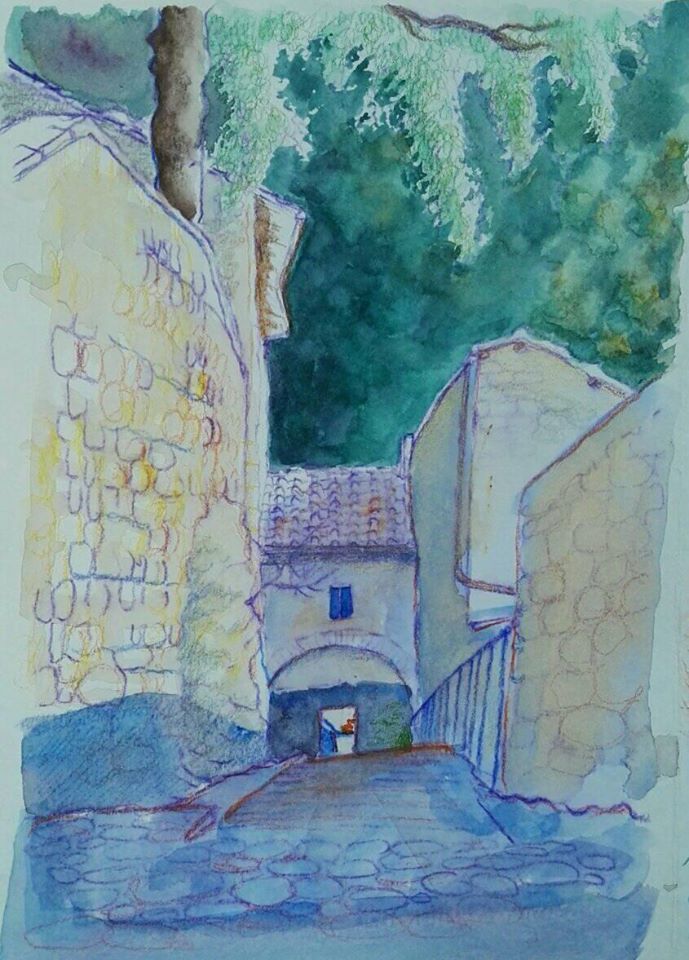
Paesaggio dal percorso verso l'Eremo
Landscape from the trail to the Hermitage
Alla fine di dicembre 2019, insieme alla mia amica Ilaria ho passato due giorni nella bellissima Assisi. E' stato molto riposante potersi immergere nel paesaggio circonfuso di una magica luce azzurra, come se davvero in questo luogo, che è soprattutto un luogo di devozione verso San Francesco, il cielo fosse più vicino alla terra.
Abbiamo visitato l'Eremo delle Carceri, percorrendo a piedi la distanza che lo separa da Assisi, e alcune delle numerose chiese, fra cui l'imperdibile Basilica di San Francesco (che contiene affreschi bellissimi, da non stancarsi mai di guardarli), Santa Maria Sopra Minerva (come non rimanere colpiti dall'apprendere che si tratta di un luogo sacro, punto di incontro fra l'umanità e il divino, da oltre 2000 anni?), San Rufino, Santa Chiara.
ingresso all'Eremo delle Carceri
Entrance to the Eremo delle carceri (Hermitage of Saint Francis)
Non solo nelle chiese, ma anche nelle vie di questa piccola città splendidamente ben conservata, si respira un'atmosfera insolita, come se davvero nell'intimo di ciascuno prevalesse il desiderio di comunicare con l'invisibile, di guardare dentro se stessi.
Un luogo unico, nel quale già non vedo l'ora di tornare.

La Rocca di Assisi al crepuscolo
The Rocca Maggiore castle in the twilight
la Basilica di San Francesco
the Basilica of Saint Francis
At the end of December 2019, together with my friend Ilaria I spent two days in the beautiful Assisi. It was very restful immersing ourselves in the landscape surrounded by a magic blue light, as if in this place, which is above all a place of devotion to Saint Francis, the sky was really closer to the earth.
We visited the Eremo delle carceri, walking along the distance between it and Assisi, and some of the many churches, including the unmissable Basilica of San Francesco (which contains many beautiful frescoes), Santa Maria Sopra Minerva (I was impressed to learn that it has been a sacred place of meeting between humanity and the divine for over 2000 years), San Rufino, Santa Chiara.
Not only in the churches, but also in the streets of this little town that is wonderfully well preserved, one breathes an unusual atmosphere, as if in the depths of each one the desire to communicate with the invisible world, to look inside yourself is prevailing.
A unique place, to which I'm already looking forward to going back.

05 settembre 2014

A Trieste #1

Grazie a una bella idea di Chiara Gomiselli lo scorso fine settimana sono stata a Trieste per due intense giornate di schizzi per le vie della città, alla scoperta di luoghi noti e meno noti, con l'ottima compagnia di Chiara Piccardi e altre amiche che si sono unite a noi in vari momenti.
Nel primo schizzo la grande e luminosa piazza dell'Unità, stupendamente affacciata sul mare.

Thanks to a great idea by Chiara Gomiselli, last weekend I went to Trieste for two intense days of sketching through the city streets, trying to discover places more or less known, with the excellent company also of Chiara Piccardi and other friends who joined us in various moments.
In the first sketch, the large and bright piazza dell'Unità, wonderfully open seawards.


Uno scorcio della piccola piazza della Valle, con i palazzi dalle facciate curve.

A view of the small piazza della Valle, with its round shaped buildings.


La chiesa di S. Antonio Nuovo, disegnata dal tavolo di un bar mentre si beveva uno spritz.

The church of S. Antonio Nuovo, sketched from the table of a bar drinking a spritz.


Uno schizzo dell'esibizione notturna in un bar del cantante Emanuele Bernardeschi, star dell'opera pop Notre Dame de Paris, molto bravo. Non potevano mancare la sua dedica con autografo accanto al disegno.

A sketch of the night performance in a bar by the singer Emanuele Bernardeschi, star of the italian pop opera Notre Dame de Paris, a very good artist. I couldn't miss his dedication and autograph near the sketch.


Secondo giorno. Scorcio della chiesa di San Spiridione, di culto serbo-ortodosso.

Second day. A view of the Serbyan Orthodox church of San Spiridione.


Monumento al poeta Umberto Saba. Questa statua, come quelle degli altri due famosi intellettuali il cui nome resta legato alla città (Italo Svevo e James Joyce), si trova in un luogo solitamente affollato, ha grandezza naturale e nessuna monumentalità, è quasi un materializzarsi improvviso del personaggio in mezzo alla gente.

Monument to the poet Umberto Saba. This statue, as those of the other two famous intellectuals whose name is tied to the city (Italo Svevo and James Joyce), is positioned in a place that is usually crowded with people, is life-size and has no monumental nature, it nearly lets us feel like the personality suddenly materializes amidst the crowd. 


(Segue).

(To be continued).

(pennarello e acquerelli su taccuino Fabriano Watercolour 14,8x21 cm)

(waterproof ink liner and watercolour on Fabriano Watercolour Sketchbook 5"x8")

23 luglio 2013

San Salvatore al Monte, tardo pomeriggio - San Salvatore al Monte, late afternoon


Dopo le piacevoli ore al Giardino delle Rose di cui ho parlato qui, la mia giornata di disegni insieme a Rita ebbe fine qui, alla chiesa di San Salvatore al Monte che, nascosta fra gli alberi, sovrasta il piazzale Michelangelo.
Poco considerata eppure tutt'altro che trascurabile quale esempio del gusto architettonico fiorentino della fine del Quattrocento, caratterizzato da forme povere e spoglie, con ridotti accenni all'antichità classica, si presentò a noi con i colori dorati e le ombre del tramonto, perfetto scenario per un ultimo disegno prima di tornare a casa.
(Penna e acquerelli su taccuino per acquerelli Moleskine 13x21 cm)

After the pleasant hours at the Rose Garden, of which I have talked here, my day of sketching with Rita finished here, at the church of San Salvatore al Monte which, hidden in the trees, stands above the Piazzale Michelangelo.
Scarcely considered and yet not insignificant at all as an example of the architectural taste in Florence at the end of the Fifteenth century, characterized by poor, bare forms, with limited traces of Classical antiquity, it showed up to us with the golden colours and the shadows of sunset, perfect scenery for one last sketch before going home.
(Ink liner and watercolours on Moleskine watercolour sketchbook 5"x8")

03 aprile 2013

La chiesa di San Giusto - The church of San Giusto


A vederla sembra una chiesa di campagna, e sicuramente in origine lo era davvero. Oggi, la piccola chiesa di San Giusto a Signano fa fatica a farsi notare entro un quartiere dominato da grandi casamenti degli anni Sessanta, che la stringono e quasi la soffocano con le loro altezze di cemento armato.
Nonostante l'aspetto un po' trascurato, è ancora viva e funzionante, diversamente dal vecchio e ormai abbandonato cinema parrocchiale a sinistra del suo ingresso; però da alcuni decenni è stata soppiantata e relegata a un ruolo secondario da un nuovo edificio ecclesiastico più grande e moderno.
Se non fosse per le tristi cancellate che rendono stranamente inospitale il loggiato, il suo aspetto non apparirebbe molto cambiato da com'era quando ci andavo con le amiche e i compagni di catechismo al sabato pomeriggio, negli anni della mia infanzia. Ripensando ad allora ritrovo i volti e i nomi di persone ormai perse di vista, per alcune delle quali mi accorgo di sentire un po' di nostalgia.
E tuttavia, una volta svoltato l'angolo, il presente torna ad imporsi con prepotenza e dopo pochi attimi i ricordi evocati dalla chiesa di San Giusto tornano a inabissarsi nella memoria, lasciando una sensazione lieve e fugace come quella che si prova dopo aver scambiato uno sguardo o un sorriso con un vecchio amico incrociato per strada.

(Penna e pastelli acquarellabili su taccuino fatto a mano dagli studenti del Liceo Artistico di Porta Romana).

By the look of it, it seems a country church, and surely it was really so originally. Today the small church of San Giusto a Signano hardly gets itself noticed, being in an area dominated by large 1960s blocks, which encircle and nearly strangulate it with their reinforced concrete heights.
Despite its quite shabby look, it's still alive and working, differently from the old and now abandoned parish cinema on the left of the entrance; but for last few decades it has been replaced and relegated to a secondary role by a new ecclesiastical building, larger and modern.
If it were not for the sad gates that make the porch strangely inhospitable, its look wouldn't be so different from how it was when I used to go there with my catechism friends every saturday afternoon, in the years of my childhood.
Thinking of that time, I find again faces and names of people of whom I have now lost sight, and I realize that I'm feeling a bit of nostalgia for some of them.
And yet, after I have turned the corner, the present impose itself again and in a few moments the recollections evoked by the church of San Giusto sink back again in the memory, leaving a light, fleeting sensation, like when one has exchanged a glance or a smile with an old friend encountered in the street.

(Pen and water-soluble wax pastels on watercolour sketchbook hand made by the students of the Liceo Artistico of Porta Romana).

11 luglio 2012

Via Faenza


Quando devo spostarmi a piedi da un luogo all'altro di Firenze, amo scegliere non il tragitto più breve, ma quello che mi piace di più, e che magari mi permette di ammirare qualcosa di bello, o di emozionante.
Fra i miei percorsi preferiti, c’è sicuramente via Faenza.
Orientata in direzione della porta a Faenza (oggi inglobata nella Fortezza da Basso) oltre la quale si trovava il convento delle monache faentine, oggi nel suo tratto più vicino al centro è un ambiente piacevolissimo, brulicante di vita e di piccoli negozi e localini senza pretese, spesso gestiti da stranieri.
Passavo di qui con la mia mamma quando andavamo insieme al vicino mercato di San Lorenzo, o venivamo in un semplice ma ben fornito negozio di pelletteria proprio qui vicino, di recente sostituito da una rosticceria cinese.
(Non è invece fra le strade che percorro a cuor leggero di notte: dopo la chiusura dei negozi, i vicoli stretti e poco frequentati di questa zona si prestano agli incontri furtivi di chi fa traffici illeciti, ed è meglio starne lontani).
Nel mio disegno, che ho eseguito in un afoso pomeriggio di inizio luglio, ho ritratto anche la piccola chiesa di San Jacopo in Campo Corbolini (sulla sinistra), trascurata dalla maggior parte dei passanti forse per il suo aspetto dimesso, nonostante le nobilissime origini  fu fondata nel remoto anno 1206, e dal 1256 appartenne ai Cavalieri Templari e più tardi, ai Cavalieri di San Giovanni (detti successivamente di Rodi e di Malta).
(matite acquarellabili su taccuino da viaggio Winsor and Newton 14,9x21 cm).

When I have to go by feet from one place to another of Florence, I love to choose not the shortest way, but the one that I like most, and that allows me to admire something beautiful or exciting.
Among my favourite ways, there surely is via Faenza.
Oriented towards the Faenza Gate (now included in the Fortezza da Basso), beyond which there was the convent of the Nuns of Faenza, today in its part closer to the city centre it’s a very pleasant scene, swarming with life and small shops and unpretentious restaurants, often managed by foreigners.
I used to walk here with my mother when we went together to the near market of San Lorenzo, or we came to a simple yet well stocked leather shop just near here, recently replaced by a Chinese rotisserie.
(While it isn't one of the streets where I walk with a light heart at night: after the closing time of the shops, the narrow and sparsely attended alleys of this area lend themselves to the sneaky encounters of those who make illegal deals, and it's better to keep out).
In my drawing, made in a sultry afternoon of early July, I also portrayed the small church of Saint Jacopo in Campo Corbolini (on the left), neglected by the majority of those walking by maybe for its humble look, despite its noblest origins  it was founded in the remote 1206, and from 1256 it belonged to the Knights Templar and, later, to the Knights of Saint John (subsequently called Knights of Rhodes and of Malta).
(watercolour pencils on travel sketchbook Winsor & Newton 5,8"x8,3" cm).

17 novembre 2011

Passeggiata a Rimaggio - A walk at Rimaggio


Chiunque abiti a Firenze, sa che per fare una bella passeggiata in mezzo alla natura, all'arte e alla storia è sufficiente dirigersi verso uno dei piccoli centri posti sul limite della città, che nonostante l'espandersi di questa hanno conservato le testimonianze della loro storia e la loro identità - mantenendosi come piccoli gioielli incastonati nelle periferie sorte dal dopoguerra ad oggi - e da lì mettersi in cammino su una qualsiasi delle strade che percorrono le splendide colline dei dintorni di Firenze, le stesse che in città troviamo con lo sguardo ogni volta che alziamo gli occhi oltre i tetti, le torri, i campanili.
Uno di questi piccoli centri è Bagno a Ripoli, nell'area a sud di Firenze. Da qui, insieme alle mie amiche Valentina e Donatella, ho fatto una passeggiata in una bella domenica pomeriggio purtroppo resa troppo breve dal ritorno dell'ora solare; tuttavia con l'aiuto della mia fotocamera ho potuto catturare alcune delle vedute che mi hanno emozionata, per poterle poi rielaborare in una serie di piccoli lavori eseguiti in studio con una tecnica per me inconsueta: il pastello a olio.

Dall'abitato di Bagno a Ripoli ci siamo incamminate in direzione di Quarto, il cui nome, indubbiamente antico, indica il quarto cippo miliare da Firenze, probabilmente lungo la variante della vecchia via Cassia fra Firenze e Roma. Ai lati della strada, campi coltivati a olivo, una delle colture più comuni della campagna toscana, per le quali proprio in queste settimane è giunto il momento del raccolto.

Everyone who lives in Florence knows that if one wishes to go for a beautiful walk amidst nature, art and history, just has to arrive at one of the small towns placed on the edge of the city, which despite its expansion have maintained the marks of their history and their identity - remaining like small jewels set on the suburbs born after the postwar period until today - and from there start walking on any street running through the splendid hills of the surroundings of Florence, the same ones that in the city we find with our look every time we raise our eyes over the roofs, the towers, the belfries.
One of these small towns is Bagno a Ripoli, in the southern area of Florence. From here, together with my friends Valentina e Donatella, I went for a walk on a beautiful Sunday afternoon unfortunately become too short after the end of daylight saving time; anyway with the help of my camera I could catch some of the views that excited me, in order to work on them in a series of small studio works using a medium that is unusual to me: oil pastels.

From the centre of Bagno a Ripoli we started walking towards Quarto, whose name, undoubtedly of ancient origin (meaning "Fourth" in Italian), indicates the milestone from Florence, probably on the variant of the old via Cassia (an ancient Roman road) between Florence and Rome. On the sides of the road, olive groves, one of the most widespread cultivations in Tuscan country, for which just in the last weeks the time of harvest has arrived.


Qualsiasi itinerario sulle colline intorno a Firenze offre magnifiche vedute della città, sulle quali invariabilmente spicca l'amato profilo della Cupola di Santa Maria del Fiore.

Any itinerary on the hills around Florence offers magnificent views of the city, on which the beloved outline of the Dome of Santa Maria del Fiore invariably stands out.


Prima tappa della nostra passeggiata, la chiesa di Santa Maria a Quarto di Rimaggio, documentata dal XIII secolo, forse addirittura anteriore al Mille, anche se rimaneggiata dai restauri successivi, che al suo interno custodisce preziosi affreschi del XV secolo.


First stop of our walk, the church of Santa Maria a Quarto di Rimaggio, documented since the Thirteenth Century, maybe even dating back before the year One Thousand, although modified by following renovations, whose interior keeps precious frescoes of the Fifteenth Century.

01 novembre 2011

La chiesa di San Barnaba - The church of San Barnaba


Fra le innumerevoli chiese di Firenze, questa non è certo una delle più note. Si trova ai margini del quartiere di San Lorenzo, all'incrocio fra via Guelfa e via Panicale, dove per strada si vedono più immigrati asiatici e africani che fiorentini, a riprova del fatto che ci troviamo in una delle zone che hanno mantenuto nel tempo il loro carattere autenticamente popolare.
La chiesa di San Barnaba, con la sua umile facciata intonacata, non fa niente per farsi notare, eppure si tratta di una costruzione molto antica, la cui prima pietra fu posata nel lontano 1322, facente parte di un complesso che oltre alla chiesa comprendeva un convento dotato di chiostro, dormitorio, refettorio e altri edifici.
Dopo svariate trasformazioni successive, il chiostro con proporzioni e apparato decorativo quattrocentesco è stato in parte cancellato, e i restanti locali hanno subito pesanti modifiche, essendo oggi occupate da abitazioni private.
Scoprii questa chiesa durante i miei anni universitari, per una ricerca che mi portò a esaminare anche il suo interno; da allora ogni volta che passo di qui ho la sensazione di ritrovare una vecchia amica che mi guarda benevola in silenzio mentre le rivolgo un tacito, frettoloso saluto con un pizzico di nostalgia.


Among the innumerable churches of Florence, this isn't certainly one of the best known. It is placed on the fringes of the area of San Lorenzo, at the crossroads between via Guelfa and Via Panicale, where in the streets one can see more Asian and African immigrants than Florentines, as a proof of the fact that we are in an area that through the years has maintained its authentic popular nature.
The church of San Barnaba, with its humble plastered façade, doesn't make any effort to attract attention to itself, yet it's a very ancient building, whose first stone was laid away back in 1322, as part of a complex which in addition to the church included a convent with a cloister, a dormitory, a refectory and other buildings.
After several renovations the cloister, characterized by Fifteenth Century proportions and decorations, has been partly dismantled, and the other spaces have been heavily modified, as today are occupied by private dwellings.
I discovered this church during my University years, for a research that lead me to examine also its interior; since then, every time I go past this place I have the feeling of finding again an old friend, who looks kindly at me while I hastily say her hello in silence with a touch of nostalgia.

10 ottobre 2011

A Venezia - In Venice


In occasione della mostra "Matite in Viaggio" a Mestre, ho avuto l'opportunità di fare una passeggiata nella bellissima Venezia insieme alle mie amiche Elisa e Anna. Nonostante le folle di turisti che riempiono le sue calli, la città conserva la sua magia di luogo splendidamente irreale, nella quale l'acqua fa ora da sfondo ora da specchio a vedute romanticamente segnate dal tempo.
Non è necessariamente lungo i percorsi più battuti dal turismo organizzato che si trovano gli angoli più ricchi di qualità architettonica e di emozione, ma era da troppo tempo che non venivo qui per poter rinunciare a una visita alla piazza San Marco con la Basilica e il Palazzo Ducale, dove sono stata ovviamente rapita dall'apparizione di San Giorgio Maggiore sull'isola omonima.
Così, mentre il sole si abbassava sull'orizzonte preparando un tramonto dai colori del fuoco, ho fatto questo piccolo disegno, che ho dipinto con le matite acquarellabili.


On the occasion of the exhibition "Matite in Viaggio" in Mestre, I had the opportunity to go for a walk in the beautiful Venice together with my friends Elisa and Anna. Despite the crowds of tourists filling its lanes, the city keeps its magic of a splendidly dreamlike place, where water is sometimes a background, sometimes a mirror of views that are romantically worn with age.
It isn't necessarily along the ways more travelled by mass tourism that one can find the corners more rich in architectural quality and emotion, but I hadn't been here for so long that I couldn't help going to see piazza San Marco with the Basilica and the Palazzo Ducale, where I was obviously enraptured by the apparition of San Giorgio Maggiore on the homonymous island.
So, while the sun was going down over the horizon, preparing a fiery red sunset, I made this small drawing, that I painted with water-soluble pencils.

25 agosto 2011

Viaggio in Dalmazia - Trip to Dalmatia (3)

Dubrovnik
La chiesa di San Biagio
The church of Saint Blaise

Dubrovnik
La chiesa di San Salvatore
The Saint Saviour Church

Dubrovnik
Le mura e porta Pile
The walls and the Gate of Pila


Nel nostro giro non poteva mancare una visita a Dubrovnik, antica città di origine romana, sottomessa a Venezia dal 1204, quindi repubblica indipendente dalla metà del XIV secolo, un tempo ricchissima grazie alle attività commerciali favorite dalla sua posizione nel Mediterraneo, finché un terribile terremoto nel 1667 segnò il suo declino.
La città attuale è il risultato della ricostruzione operata in epoca barocca all'indomani del terremoto, e nonostante le distruzioni subite durante l'assedio del 1991-92, ha mantenuto la sua straordinaria eleganza in cui convivono gotico veneziano, rinascimento fiorentino, testimonianze barocche e resti medievali, in un insieme raffinato e splendente grazie alla chiara pietra calcarea utilizzata come materiale da costruzione oltre che per le eleganti pavimentazioni delle strade, oggi lucide per l'usura.
Solo il primo di questi tre schizzi è stato realizzato direttamente sul posto; non ho potuto fare di meglio a causa del caldo, della luce quasi insostenibile, delle folle di turisti in ogni dove, soprattutto comitive di gite organizzate, che giungono qui in pullman o a bordo di gigantesche navi da crociera.


In our tour, we couldn't miss visiting Dubrovnik, ancient city of Roman origin, subject to Venice from 1204, then independent republic from the middle of the Fourteenth Century, once very wealthy thanks to the trade business favoured by its position in the Mediterranean, until a terrible earthquake in 1667 marked its decline.
The city of today is the result of the reconstruction made in the baroque period after the earthquake, and despite the destruction due to the siege of 1991-92, it has maintained its extraordinary elegance where Venetian gothic, Florentine renaissance, baroque evidences and Middle Ages remains live together in a refined whole, shining for the clear calcareous stone used as building material and also for the elegant paving of the the streets, now bright for the usage.
Only the first of these sketches was made directly on location; I couldn't do better because of the heat, the almost unsustainable light, the crowds of tourists everywhere, especially organized groups that come here by coach or on board of huge cruise ships.

28 aprile 2011

Il cielo sopra il Duomo - The sky over the Duomo


Sono entrata nel Duomo di Firenze pochissime volte, e molto di rado negli ultimi anni, da quando l'ingresso è a pagamento (e spesso richiede lunghe attese in fila alla biglietteria) a meno che non si entri per le funzioni religiose, senza la possibilità di esplorare camminando l'interno della chiesa. 
Invece mi succede molto spesso di passare davanti, dietro e intorno a questa imponente costruzione, e di ammirare non solo l'esterno della cattedrale, in gran parte completato nell'Ottocento, ma anche la piacevole, imprevedibile varietà dei palazzi circostanti.
Così, quando qualche giorno fa ho deciso di confondermi fra la folla dei turisti in visita alla città sedendomi su una panchina lungo il lato nord del Duomo per mettermi a disegnare, ho rivolto volentieri lo sguardo a uno di questi anonimi palazzi, lasciando entrare solo in parte nel mio disegno una delle tre tribune che circondano la grande Cupola.
Al di sopra di tutto questo, il magnifico cielo di Firenze in una bella giornata di primavera.


I've entered the Duomo of Florence a few times, and quite rarely in the latest years, since when there is an entry fee (and often one has to stand in a long queue at the ticket office), unless one enters just for the Mass, without the possibility to walk around and explore the interior of the church.
On the other hand, I often happen to walk in front of or behind or around this imposing building, and to admire not only the outside of the cathedral, mostly completed in the Nineteenth Century, but also the pleasant, unpredictable variety of the surrounding palaces.
So, when a few days ago I decided to lose myself in the crowd of tourists visiting the city, sitting on a bench along the northern side of the Duomo to start drawing, I was glad to look at one of these anonymous buildings, letting only partially in my drawing one of the apses that surround the great Dome.
Over all of this, the magnificent sky of Florence on a beautiful day of spring.

17 aprile 2011

31° Sketchcrawl in piazza Santa Maria Novella


Per questo 31° Sketchcrawl ci siamo dati appuntamento in piazza Santa Maria Novella, una delle piazze più belle di Firenze. Qui sono molti gli spunti per dei disegni interessanti, ma il primo elemento che attrae l'attenzione è la bellissima facciata della chiesa, rivestita di marmi policromi, splendente alla luce del giorno come un raffinato gioiello. Impossibile perciò sottrarsi al fascino di questa mirabile architettura, disegnata da Leon Battista Alberti e realizzata fra il 1448 e il 1478 a completamento della chiesa, iniziata alla fine del Duecento. Ho deciso però di non concentrarmi solo su questa, ma di dare spazio anche al contorno, raffigurando gli archi acuti degli avelli, ovvero le nicchie destinate un tempo ad accogliere le sepolture delle maggiori famiglie fiorentine, i cipressi del piccolo cimitero che affianca la chiesa, alcune delle case che affacciano sulla piazza, uno dei due obelischi cinquecenteschi in marmo.
E tuttavia intorno a me c'erano ancora molte altre cose da disegnare, dall'antico Spedale di San Paolo, di fronte alla chiesa, al colorato mercatino di prodotti tipici che ieri ravvivava la piazza: per questo sono tornata a casa a malincuore, con il desiderio di tornare qui prima possibile.


For this 31st Sketchcrawl we made an appointment in Piazza Santa Maria Novella, one of the most beautiful squares in Florence. Here there are many inspiring subjects for interesting drawings, but the first thing that draws the attention is the wonderful façade of the church, covered with polychrome marbles, shining in the daylight like a refined jewel. So it's impossible not to come under the spell of this marvellous architecture, designed by Leon Battista Alberti and built between 1448 and 1478 to complete the church, started at the beginning of the Thirteenth Century. Anyway I decided not to focus just on it, but to leave room also to what surrounds it, portraying the pointed arches of the avelli, that is the niches destined for the tombs of the greatest Florentine families, the cypresses of the small graveyard on one side of the church, some of the houses facing the square, one of the two Sixteenth Century marble obelisks.
Nevertheless, around me there were still many things to draw, from the ancient Spedale di San Paolo to the colourful market of typical foods that yesterday livened the square: for this reason, I came back home reluctantly, with the desire of coming here again as soon as I can.

06 novembre 2010

Armonia e decadenza alla Santissima Annunziata - Harmony and decay at the Santissima Annunziata


Passare, e magari fermarsi per una breve sosta in piazza Santissima Annunziata significa prendersi una pausa dalla confusione delle strade affollate per lo shopping o per il turismo ed immergersi in una dimensione dove regnano la geometria, le proporzioni, la razionalità. Qui non ci sono negozi o altre attrazioni, ma solo la serena armonia di sobrie architetture rinascimentali.
In questo schizzo ho raffigurato l'angolo che questa piazza forma con via della Colonna, dove termina il loggiato dello Spedale degli Innocenti di Filippo Brunelleschi, costruito a partire dal 1419 e, sulla sinistra, il portico seicentesco della chiesa della Santissima Annunziata.
È una piazza accogliente, grazie alle scalinate sulle quali si può sedere, ai portici che offrono riparo, alle piacevoli fontane (una di queste è visibile in un mio precedente post); purtroppo proprio per questo motivo è esposta al degrado portato dalla presenza di persone senza fissa dimora, non tutte fra le più tranquille.


Passing through piazza Santissima Annunziata and stopping there for a short pause means taking a break from the mess of the streets crowded for shopping or for tourism and submerge oneself in a world ruled by geometry, proportions, rationality. Here there are no shops nor other attractions, but only the quiet harmony of plain Renaissance architectures.
In this sketch I have represented the corner formed by the square with via della Colonna, where the loggia of the Spedale degli Innocenti — built by Filippo Brunelleschi from 1419 — ends and, on the left, the XVII Century porch of the Santissima Annunziata church.
It's a welcoming square, thanks to the stairs where one can sit, to the loggias that offer shelter, to the pleasant fountains (one of these can be seen in one previous post); unfortunately just for this reason it's exposed to the decay brought by the presence of homeless people, not all of the most quiet kind.

08 ottobre 2010

La chiesa di San Marco - The church of San Marco


Il convento di San Marco, che occupa un intero isolato nel centro di Firenze, ha origini molto antiche, anche se il suo aspetto attuale è dovuto principalmente all'importante ristrutturazione che subì nella prima metà del Quattrocento. La chiesa, rimaneggiata al suo interno più volte nei secoli, si contraddistingue per la sua facciata settecentesca, ornata di statue e bassorilievi.
La piazza antistante la chiesa è oggi così caotica, soprattutto per il continuo passaggio di autobus e taxi, che difficilmente la facciata riesce ad attirare gli sguardi dei passanti.
Per disegnarla ho scelto un punto di vista laterale, approfittando della presenza di una comoda panca di via, e per essere veloce e concisa ho usato la matita a carboncino e poi l'acquerello.
Nonostante il rumore e il viavai di persone ho lavorato con grande tranquillità, disegnando mentre cominciava a piovere e dipingendo in un altro giorno sotto un sole caldissimo.
Circa un anno fa, all'incirca dallo stesso punto, disegnai una veduta della piazza.


The Convent of San Marco, which stands in an entire city block in the centre of Florence, has ancient origins, although its current shape is mainly due to the important renovation that it underwent in the first half of the XV century. The church, whose interior has been modified several times through the centuries, is characterized by its XVIII century façade, decorated with statues and bas-reliefs.
The square in front of the church nowadays is so chaotic, most of all because of the continuous passage of buses and taxis, that the façade can hardly attract the  eyes of the people passing by.
In order to draw it, I chose a lateral point of view, taking advantage of the presence of a panca di via, and to be quick and concise I used charcoal pencil and then watercolour.
Despite the noise and the coming and going of many people, I worked with great peacefulness, drawing while the rain was beginning and painting in another day under a very hot sun.
Nearly one year ago, approximately from the same point, I draw a view of the square.

01 ottobre 2010

Il raduno degli Urban Sketchers Italy a Treviso - The meeting of the Urban Sketchers Italy in Treviso


Ho trascorso l'ultimo fine settimana a Treviso, dove ho avuto l'opportunità di partecipare a una serie di eventi collegati al Comic Book Festival 2010; fra questi la splendida mostra Carnet de Voyage e il raduno degli Urban Sketchers Italy.
In occasione di quest'ultimo, per la prima volta ho provato l'emozione di sentirmi parte di un gruppo unito dall'interesse comune per gli schizzi dal vero, e con grande entusiasmo mi sono impegnata nella realizzazione di questi due acquerelli: il primo eseguito lungo uno dei canali che circondano la Pescheria, il secondo in piazza Sant'Andrea.
(Ne ho fatti anche alcuni altri, li pubblicherò fra breve tempo).
Mi sono divertita moltissimo, ed è stato molto bello anche poter sfogliare gli sketchbooks degli altri disegnatori e ascoltare i loro racconti circa le tecniche, i procedimenti usati, i piccoli trucchi per ottenere gli effetti migliori.
Vorrei quindi ringraziare tutti, e in particolare vorrei rivolgere un grazie speciale ad Andrea Longhi, senza il quale non avrei mai potuto prendere parte a tutto questo!
p.s. guarda la mappa!

I spent the last weekend in Treviso, where I had the opportunity to participate to several events connected to the Comic Book Festival 2010; among these, the wonderful exhibition Carnet de Voyage and the meeting of Urban Sketchers Italy.
On the occasion of the latter, for the first time I had the feeling of being part of a group united by the common interest in location drawings, and with great enthusiasm I engaged myself in the making of these two watercolours: the first 
was made along one of the canals surrounding the Pescheria, the second in Piazza Sant'Andrea.
(I also made some other sketches, I'll post them in a short time).
I enjoyed myself so much, and it was really beautiful to flip through the pages of the other sketchers' books and listen to their tales regarding techniques, proceedings, the little tricks to obtain the best effects.
So I would like to thank everyone, and in particular I would like to give a special thank you to Andrea Longhi, without whom I couldn't ever take part to all this!
p.s. see the map!

15 settembre 2010

La cupola di San Frediano in Cestello - The dome of San Frediano in Cestello


Dall'insieme compatto dei tetti di Firenze, emergono i volumi imponenti e tuttavia aerei di numerose cupole, che appaiono sospese nel cielo come se a sostenerle fosse l'aria stessa; prima fra tutte ovviamente la cupola di Santa Maria del Fiore, emblema della città, intorno alla quale se ne dispongono altre, più piccole e meno conosciute.
Fra queste una delle mie preferite è la cupola della chiesa di San Frediano in Cestello, posta sulla riva sinistra dell'Arno, edificata alla fine del XVII secolo, che ho rappresentato in questo acquerello guardandola dalla vicina piazza del Carmine.
Stavolta non ho disegnato le macchine in sosta, poiché tutta la piazza non è altro che un esteso parcheggio, ma ho preferito concentrarmi sulla cupola e su quanto la circonda: il campanile, le semplici, antiche case del quartiere di San Frediano con i tradizionali tetti in cotto, il cielo di Firenze in un bel pomeriggio di fine estate.


From the whole of the roofs of Florence, the imposing and yet aerial volumes of numerous domes emerge and look like hanging in the sky as if they were supported by the air itself; first of all obviously the dome of Santa Maria del Fiore, emblem of the city, around which many others, smaller and less known, are disposed.
Among these one of my favourite ones is the dome of the church of San Frediano in Cestello, placed on the left bank of the river Arno, built at the end of the XVII century, which I have represented in this watercolour looking at it from the near piazza del Carmine.
This time I haven't drawn the parking cars, because all the square is nothing but a wide car park, but I've preferred to concentrate on the dome and what is around it: the bell tower, the simple, ancient houses of the district of San Frediano with their traditional tile roofs, the Florence sky in a beautiful afternoon at the end of summer.

04 luglio 2010

La chiesa e il quartiere di San Lorenzo - The church and the area of San Lorenzo


Il quartiere di San Lorenzo con il suo vivace mercato, frequentato dai turisti più che dai fiorentini, mi attrae ogni volta che sono in cerca di suoni, voci e colori che almeno per un po' mi distraggano da pensieri e preoccupazioni. Anche la chiesa di San Lorenzo era un tempo una delle mète che amavo di più nel corso delle mie passeggiate, finché l'ingresso è diventato a pagamento rendendo poco opportune le brevi visite improvvisate.
L'esterno della chiesa, per quanto questa sia priva di facciata, è interessante per l'accostamento di volumi diversi per forma e per altezza: le navate, le cappelle, le cupole. Quella che si vede in questo acquerello è la cupola della Sagrestia Nuova di Michelangelo, splendida architettura che contiene alcuni capolavori di scultura, anche questi opera di Michelangelo: le tombe di Lorenzo e Giuliano e de' Medici con le statue del Giorno, la Notte, l'Aurora e il Crepuscolo. Ho voluto pero rappresentare anche le case e i palazzi del quartiere con la loro schietta semplicità.
Ho eseguito l'acquerello a più riprese, ma sempre durante l'ora di pranzo, disegnando e dipingendo mentre turisti da ogni parte del mondo seduti vicino a me si concedevano una pausa all'ombra per mangiare, riposarsi, fumare una sigaretta, talvolta dormire.

The area of San Lorenzo with its lively market, with more tourists than Florentines hanging around, attracts me every time I am looking for sounds, voices and colours which may distract me, at least for a while, from everyday thoughts and worries. Also the church of San Lorenzo used to be one of my favourite destinations during my walks, until an entrance fee has been introduced, making short, improvised visit not so convenient.
The outside of the church, although it hasn't a façade, is interesting for the combination of volumes that are different in shape and height: the aisles, the chapels, the domes. The one that can be seen in this watercolour is the dome of the Sagrestia Nuova by Michelangelo, wonderful architecture that contains some sculpture masterpieces, also made by Michelangelo:  the tombs of Lorenzo and Giuliano de' Medici with the statues of the Day, the Night, the Dawn and the Twilight. I have wished to represent also the houses and palaces of this area, with their sincere simplicity.
I have made this watercolour in a few days, resuming it day by day, but always during lunch time, drawing and painting while tourists coming from many parts of the world, sitting beside me, were allowing themselves a pause in the shadow to eat, rest, smoke a cigarette, sometimes sleep.

16 aprile 2010

Un angolo di Inghilterra a Firenze - A spot of England in Florence

La Firenze ottocentesca è ricca di episodi singolari, talvolta sorprendenti, fra i quali si può includere anche la Holy Trinity Church, costruita a partire dal 1890 su iniziativa della comunità anglo-fiorentina sul luogo dove già sorgeva una chiesa anglicana.
L'incarico fu affidato a un architetto scozzese, George Frederick Bodley, esperto nella costruzione di chiese e noto esponente del gothic revival, all'epoca molto diffuso in Inghilterra. 
Da alcuni decenni la chiesa è passata alla comunità valdese, ma ha mantenuto il suo aspetto ispirato all'architettura medievale, sebbene ai miei occhi essa appartenga più a un Medioevo fiabesco di cavalieri, maghi e principesse che non a quello reale e tuttora tangibile in certe antiche costruzioni del centro della città.
Ho realizzato il disegno stando in piedi su un lato della strada che costeggia la chiesa, senza che nessuno dei rari passanti mostrasse di accorgersi della mia presenza.


The Nineteenth Century Florence is rich of odd and sometimes surprising episodes, among which we might include also the Holy Trinity Church, built from 1890 on the initiative of the Anglo-Florentine community on the place where already stood a previous Anglican church.
The charge was assigned to a Scottish architect, George Frederick Bodley, skilled in building churches and noted representative of the Gothic Revival, very popular in England in those years.
For the last few decades the church has passed to the Waldensian community, but it has maintained its look inspired by medieval architecture, altough it appears to me more close to a fairy-tale age of knights, magicians and princesses than to the real Middle Ages that are still palpable in certain ancient buildings of the city centre.
I made this drawing standing on one side of the street along the church, while none of the rare passers-by seemed to notice my presence.

03 marzo 2010

Un campanile al crepuscolo - A bell tower at twilight


Il giorno in cui ho realizzato questo disegno sono stata a lungo incerta su quale soggetto scegliere per un acquerello. Mi sembrava che nessuna fra le idee che avevo in mente fosse in sintonia con il mio stato d'animo, finché, in una via centrale eppure quasi deserta della città, mi sono trovata davanti questo campanile, appartenente alla chiesa dei Santi Michele e Gaetano. Mi hanno colpita le sue proporzioni armoniose, l'elegante profilo delle curve di raccordo con le più basse costruzioni vicine e, soprattutto, il colore indefinibile dei suoi muri, che nel tardo pomeriggio lo rendeva simile a un oggetto trasparente, sospeso nella luce irreale del crepuscolo.


The day I made this sketch I had been uncertain for quite a long time about the subject I could choose for a watercolour. It seemed to me that none of the ideas I had in my mind was in tune with my mood, until, in a central yet almost deserted street, I found myself in front of this bell tower, belonging to the Church of Santi Michele e Gaetano. It impressed me for its harmonious proportions, for the fine outline of the curves connecting it to the lower contiguous buildings and, most of all, for the undefined colour of its walls, which in the late afternoon made it look like a transparent object, suspended in an unreal twilight.

16 settembre 2009

La chiesa russa di Firenze


In questo acquerello ho rappresentato la chiesa russa ortodossa di Firenze, una costruzione che risale ai primi anni del secolo scorso. Si trova in una strada secondaria a pochi passi dai viali sempre affollati di automobili; passandole accanto si ha la sensazione di trovarsi non più a Firenze, ma in un'indefinita città d'Oriente. Per realizzare l'acquerello ho eseguito un disegno molto accurato, riproducendo perfino le singole scaglie di ceramica che rivestono le cupole, meravigliosamente colorate.

In this watercolour I have represented the Russian Orthodox church in Florence, a building that dates back to the first decade of the XX century. It stands in a secondary road, near the boulevards always crowded with cars; passing by it you have a feeling that you aren't in Florence anymore, but in an undefined Eastern city. For this watercolour I have made a very accurate drawing, reproducing even each single piece of ceramics that covers its domes, wonderfully coloured.